
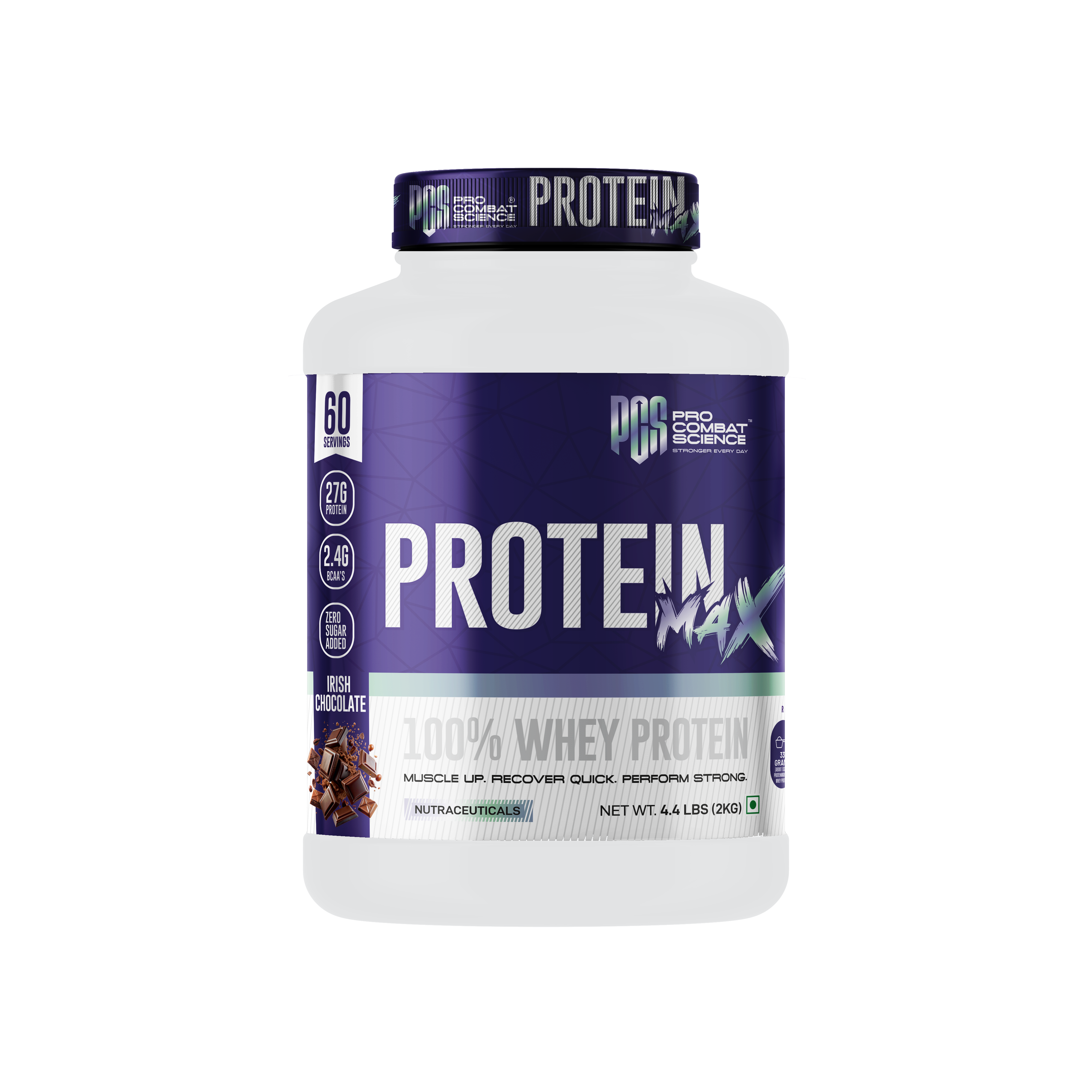
Should you mix whey protein with milk or water?
Start with the mixing directions on your product. If the label allows either, the practical difference is what your chosen liquid adds to the drink. Plain water contributes no protein or calories. Milk contributes nutrients according to its own carton or pack, so the finished shake is not nutritionally identical to powder mixed with water.
There is no universal winner for every person or routine. Choose using the full shake's ingredients and nutrition, your dietary requirements, and the consistency you prefer. Do not treat a social-media rule such as “water for cutting, milk for bulking” as a complete food plan.
How to calculate a shake made with milk
Use two labels: the powder and the liquid. Record the powder amount you actually use. Then multiply the liquid's nutrition per 100 ml by your volume divided by 100. Add corresponding totals together.
Here is a hypothetical calculation, not a PCS label claim. Suppose one serving of a powder declares 24 g protein and 120 kcal, and your chosen milk declares 3 g protein and 60 kcal per 100 ml. If you add 200 ml of that milk:
- Milk protein: 3 × 2 = 6 g.
- Milk energy: 60 × 2 = 120 kcal.
- Complete shake: 24 + 6 = 30 g protein, and 120 + 120 = 240 kcal.
With plain water, that powder example remains 24 g protein and 120 kcal. Use your own labels instead of copying these illustrative values. Count ingredients such as fruit, oats, sugar or nut butter separately if you add them.
Can I use a plant-based drink?
If your powder's directions permit it, check the drink's ingredient and nutrition label before making a comparison. Different plant-based drinks have different protein, energy and sugar amounts. A carton called “milk alternative” does not automatically provide the same nutrition as dairy milk.
Also check allergens in both the powder and the drink. A plant-based liquid does not change the ingredients already in a whey powder.
Does water make whey suitable for a milk allergy?
No. Whey is milk-derived. Mixing it with water does not remove that ingredient. Milk allergy is a reason to avoid the relevant allergen, not simply to change the liquid used for mixing. The FDA food-allergy guidance explains ingredient declarations and identifies whey as a milk ingredient.
If you are uncertain about an allergy or experience symptoms, ask a qualified health professional. Do not use this article to diagnose yourself or test a suspected allergy by trying a smaller shake.
What about taste, thickness and mixing?
Taste and consistency are personal preferences. Use the liquid quantity stated on the pack first. If the directions allow a range, you can choose within it rather than assuming an extra-thick drink contains more protein. The amount of powder determines the powder's contribution; reducing the liquid does not add nutrients.
Measure powder according to the stated serving. A heaped scoop can differ from the intended amount. Close and store the powder as directed and follow the handling instructions for the liquid you use.
Is one option better after a workout?
This article does not establish that milk or water produces better training results. If your question is about exercise nutrition, the NIH sports supplement guide offers general background, and a qualified professional can help relate it to your diet.
For buying decisions, compare PCS whey flavours and sizes. For the maths behind a label, read protein per scoop and cost per serving. Choose a product and mixing method that you can use as directed, rather than expecting the liquid alone to determine a result.